Please note that this post contains affiliate links to find out more information, read my disclosure policy for more information.
When you are in Tokyo and you are looking where the spiritual center of the city is, then you can go to these religious shrines. Having visited Japan in December 2025 and lived in Taiwan for 14 years, I have been to handfuls of Asian temples and shrines, and the sacred places of Tokyo never cease to impress me by their combination of the conservatory past and the fresh energy.
Tokyo is a massive city of neon lights and technological advancements, yet there are small oases of calm shrines all over the city that allow one to have a glimpse of the Japanese spiritual heritage. These sacred places offer a peaceful escape of the urban noise and opportunity to understand centuries of Japanese culture.
I had also drew one of the fortune papers for good luck!
Be it the scent of incense in the air, the ringing of prayer bells, the good omen slips around trees, or the people genuflecting in prayer there is something magical in visiting the shrines in Tokyo. Well, I just can not describe the magic, and you had better go and experience it!
Pro tip >> Tokyo has a great system of public transport, however, in case you want to make the most out of your time and see as many shrines as possible on a single day, you may want to employ a personal guide, who can take you through and introduce the cultural meaning of each location.
Best shrines in Tokyo overview
While Tokyo has hundreds of shrines, these five stand out for their historical significance, stunning architecture, and unique atmosphere. Here are my personal favorites:
- Senso-ji Temple (Asakusa) – Most iconic shrine in Tokyo, perfect for first-timers
- Meiji Jingu Shrine – Best shrine in Tokyo for experiencing nature and tranquility
- Nezu Shrine – Most photogenic shrine with stunning azalea gardens
- Hie Shrine – Best shrine in Tokyo for tunnel gates and city views
- Yasukuni Shrine – Most historically significant and peaceful grounds
1. Senso-ji Temple (Asakusa)
The oldest and most popular Buddhist temple in Tokyo is the Senso-ji and it is definitely the place in Tokyo that you must visit to be a part of the must-visit shrines in Tokyo. This temple is found in the historic district of Asakusa and this has had a continuous flow of visitors since 628 AD, that is more than 1,400 years old.
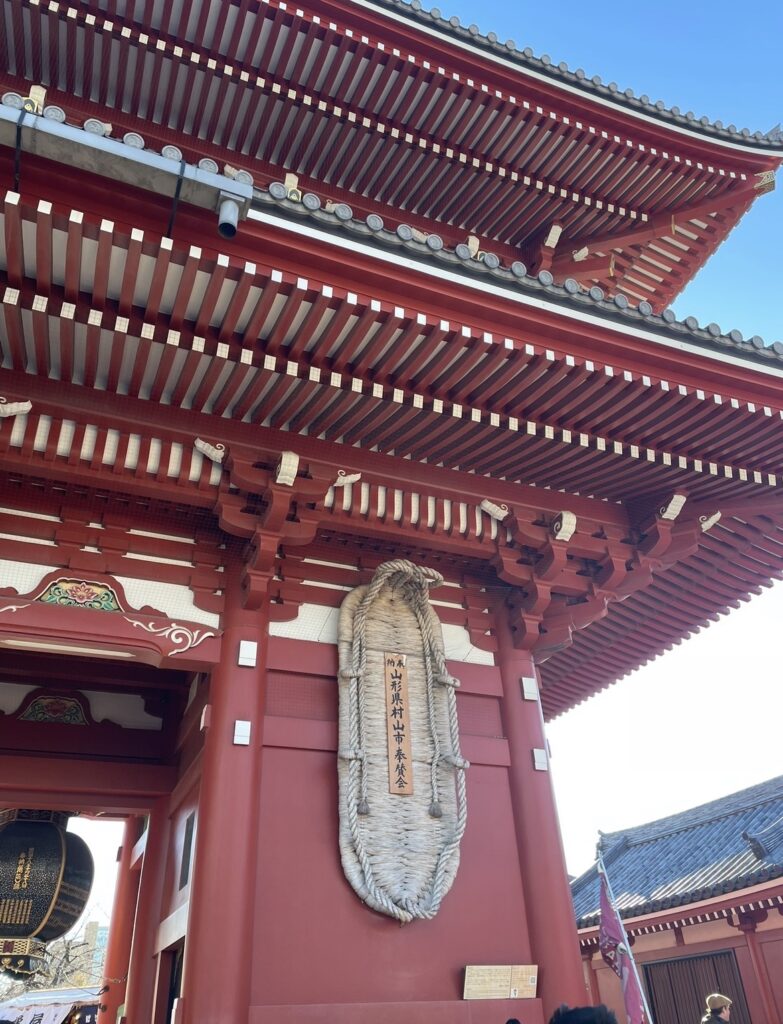
You can start your trip to Senso-ji at the main gate the Kaminarimon Gate that is made in the form of a huge red lantern (its weight is approximately 700 kg). By passing through this gate, you will be in Nakamise-dori, the colorful shopping street consisting of old-fashioned stalls that sell all forms of goods such as handmade crafts, delicious Japanese street food (such as freshly made senbei (rice crackers) and ningyo-yaki (sweet cakes).
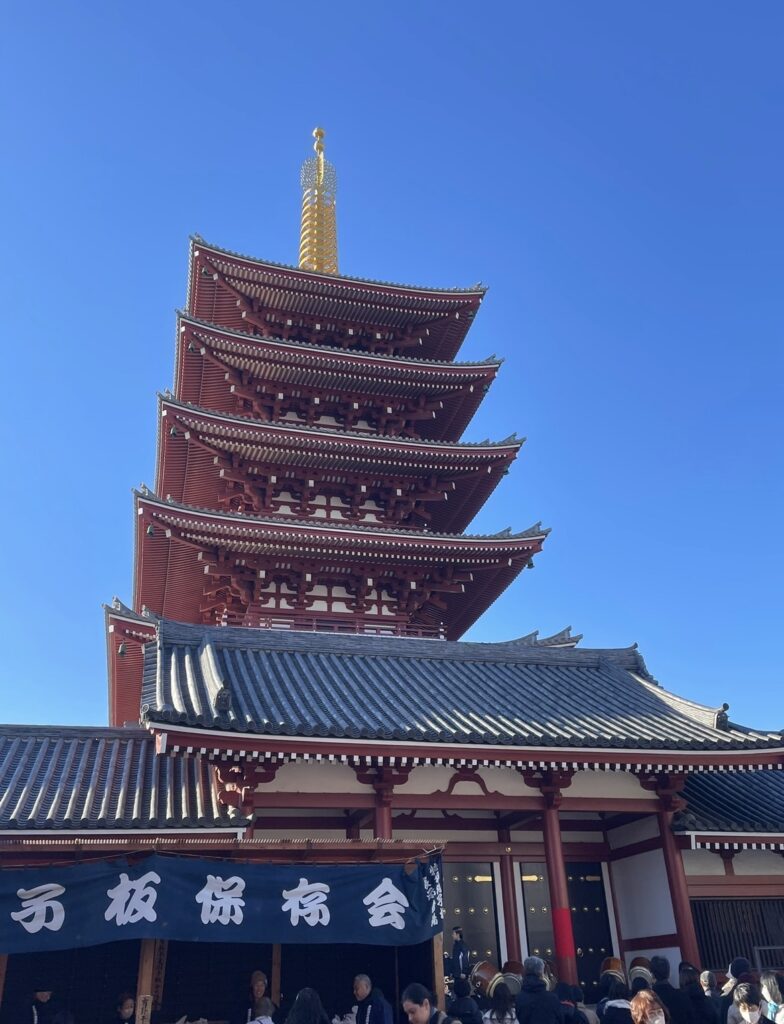
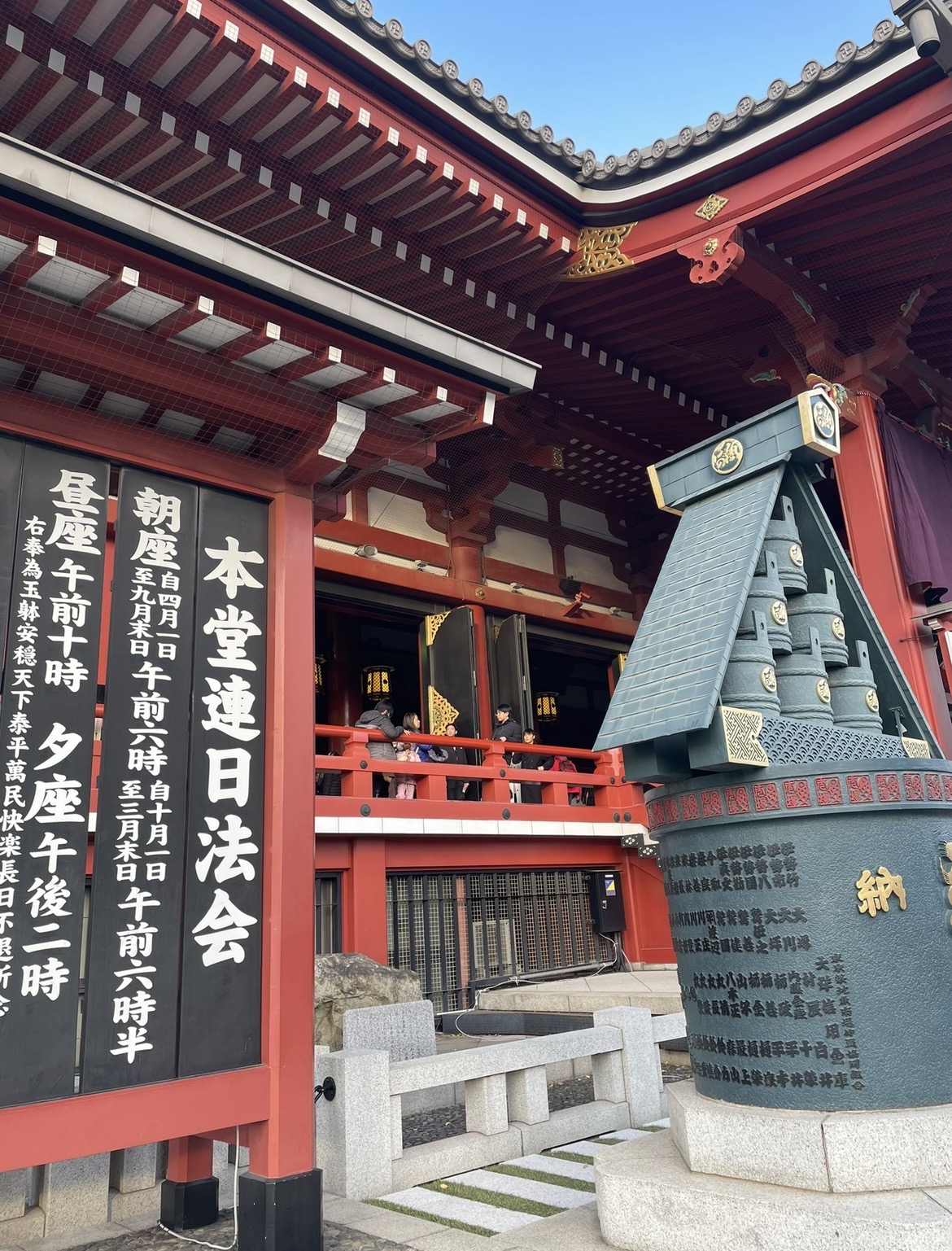
The 250-meter stroll through Nakamise will take you to the major temple complex where you will be able to see the impressive five-story pagoda and the main hall. The first thing to do is to go to the big incense burner where people come and wave smoke over their heads to cleanse themselves and bring good health to any part of their body that the smoke passes. A golden statue of Kannon, the Buddhist mercy god is located in the main hall.
Although photography is not permitted in the main hall, its lavish decorations and tranquility are a pleasant experience. And remember to test your luck by drawing an omikuji (paper fortune) 100 yen, and the worst thing is that in case of misfortune, it is easy to tie it to the allotted rack and forget your bad omen! PRO TIP Senso-ji is overrun by people during the day, in particular on weekends.

To have a more serene moment and capture beautiful photos go very early in the morning (between 6-7 AM) when the temple opens up. Night lighting is also perfectly lit in the grounds giving a totally different feel. NOTE >> Senso-ji Temple is free to enter but one can make donations.
2. Meiji Jingu Shrine
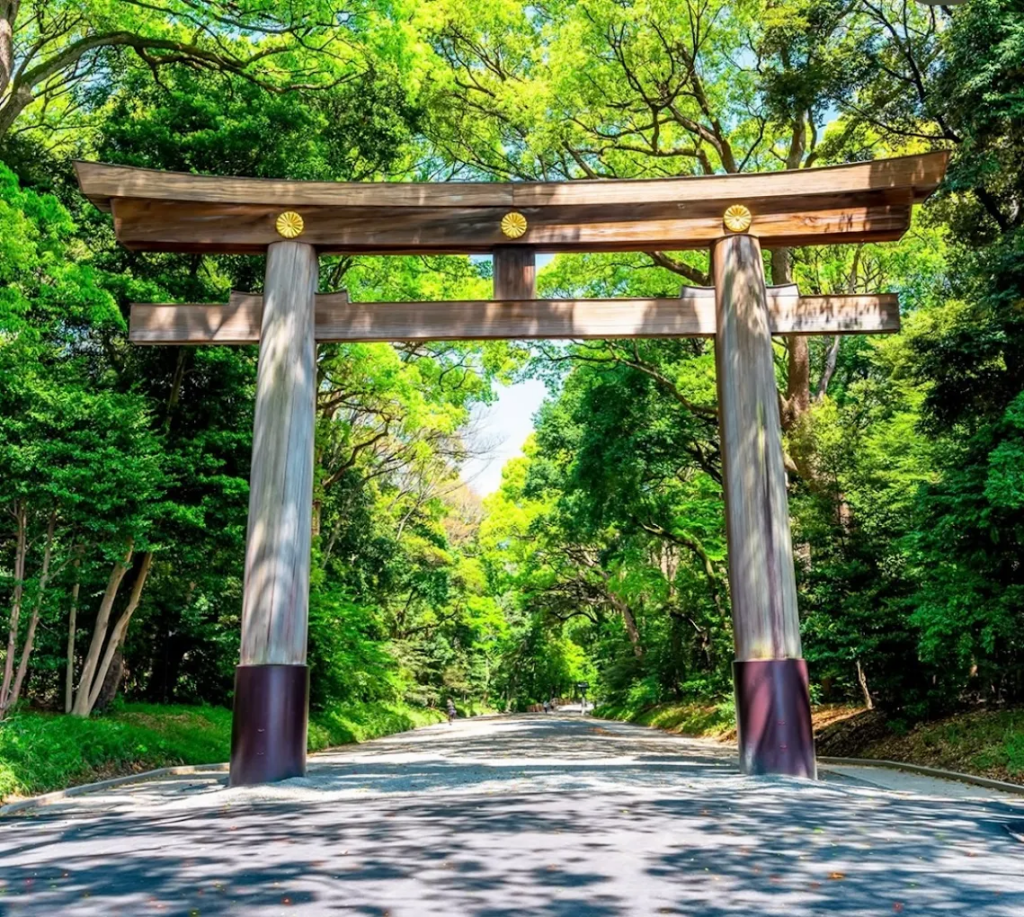
The Meiji Jingu is among the most crucial Shinto shrines in Tokyo, honoring Emperor Meiji and Empress Shoken who contributed to the modernization of Japan during the late 19 th century. The most remarkable feature of this shrine is that it is in the midst of an evergreen forest of 170 acres in the center of the busy Shibuya.
The experience to the shrine is on its own. As you stroll up and down the broad gravel walks under great trees contributed throughout Japan, you will pass through huge torii gates consisting of 1,500-year-old cypress trees. The forest is incredibly silent taking into consideration the fact that it is located in the heart of one of the most active cities of the world the trees literally shut out urban noises.
Towards the entrance, there are great exhibits of sake barrels and wine barrels which were contributed to the gods whose names have been enshrined there. The principal shrine structures were rebuilt in 1958 following the destruction of the structures during the WWII, yet they still retain the ancient architectural design through the simple and graceful cypress wood constructions. You should be lucky to experience a classic Shinto wedding ceremony conducted on the grounds. The bride wearing a pure white kimono and the groom wearing a hakama makes a lovely picture that perfectly exemplifies the Japanese tradition.
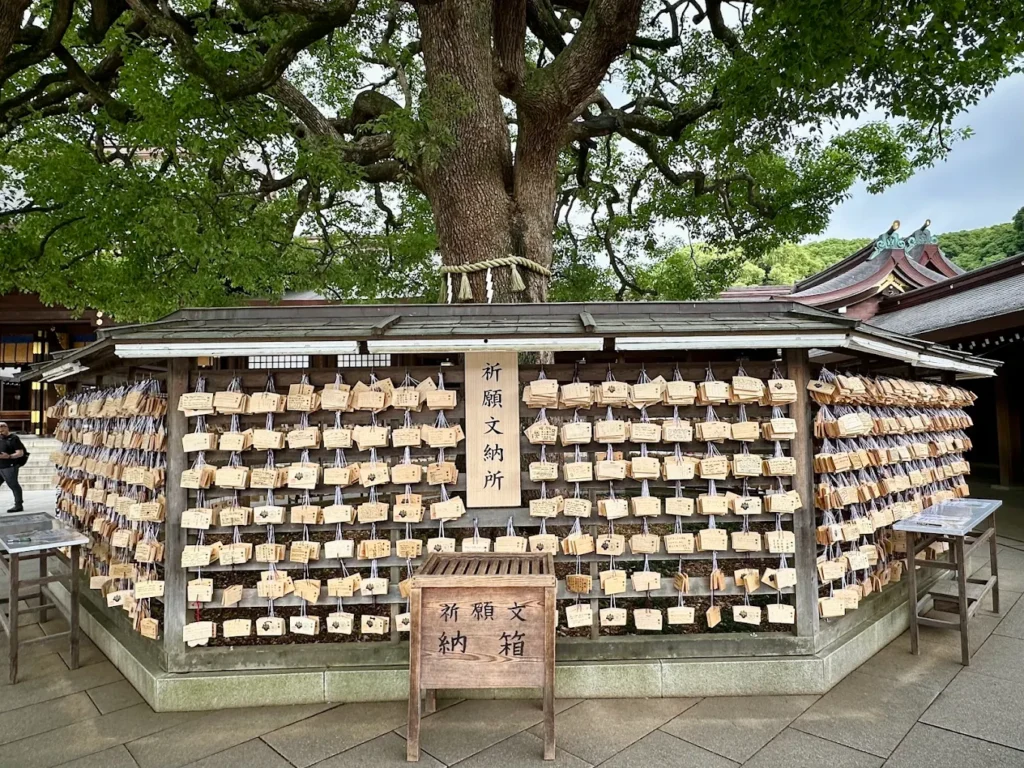
It also has beautiful gardens (separate admission fee) with tea house and iris garden which goes into full bloom in June. All year round, there are different festivals and ceremonies every year at Meiji Jingu and it is best to be able to plan when to visit.
PRO TIP >> You want to come on January 1 st to enjoy hatsumode (the very first day shrine visit of the year) – More than 3 million people visit Meiji Jingu in the first three days of the month of January so it is the most popular shrine in the country to visit during the New Year. It is just a matter of being ready to huge crowds!
3. Nezu Shrine
Nezu Shrine is a Tokyo secret, which is believed to have got the finest architectural designs and a phenomenally amazing azalea garden. This shrine has undergone minimal modifications since its construction in 1706, and is therefore one of the few shrine complexes in Tokyo to survive both the Great Kanto earthquake and the bombing of the WWII.
The most photographed portion of the shrine is the Senbon Torii, which is a tunnel-like series of vermillion torii gates leading up a small hill. Smaller than the Kyoto Fushimi Inari, Nezu torii tunnel tunnel suggests the same magic experience without the huge crowds. The route brings one to a small shrine on top with an overview of the complex. However, the actual star of Nezu Shrine is Azalea Garden that dramatically blooms in color between the middle of April and the beginning of May.
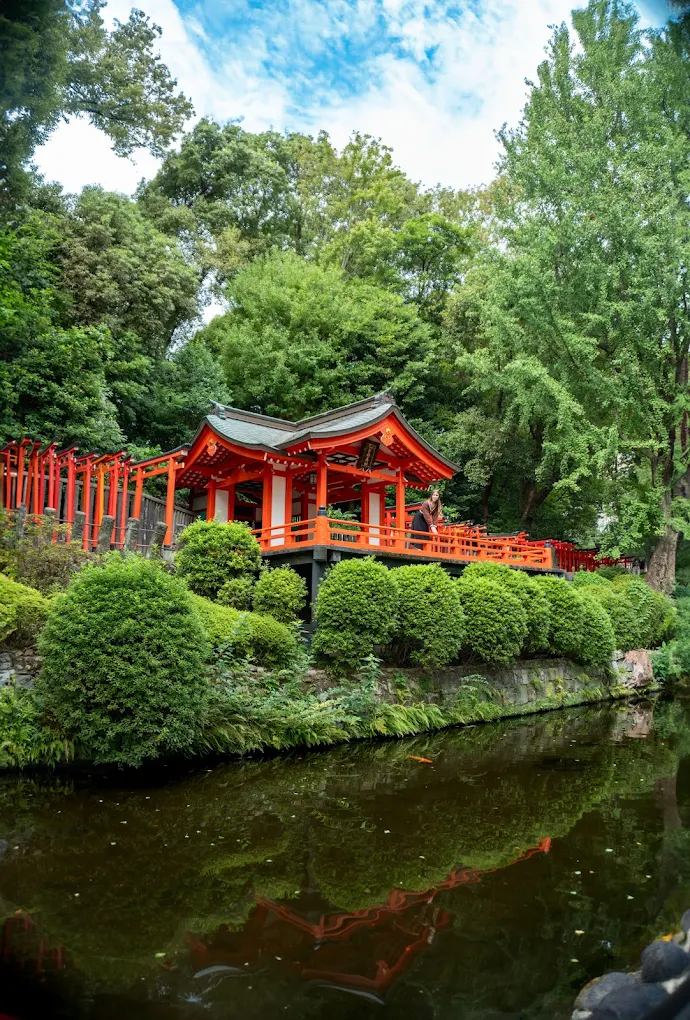
The bushes in the Azalea Festival, which are held once a year in the month of February, have about 3,000 azalea bushes of 100 varieties of colors that are spectacular: pink, purple, red, and white. The garden has intriguing wavering paths that lead one through this flowery paradise with the vivid torii gates forming an attractive background.
Nezu Shrine is still worth visiting even during the season when there are no azaleas as it boasts of a beautiful traditional architecture, serene atmosphere and is far less touristy than other huge shrines. The reasons are that it has many valuable cultural attributes, and the graceful buildings of the shrine present the best architectural designs of the Edo era.
PRO TIP >> It is best to come in early morning, especially during azalea season (late April to early May) so that you can avoid the people and get the best light to take photographs. During the time of the festival, there is a small entrance fee of 200 yen into the garden, though this is certainly worth it.
4. Hie Shrine
Hie Shrine is a Tokyo shrine of one of the most inimitable experiences with its impressive speck of red torii gates hiking up the hillside, gorgeous views of the city, and interesting relationship to the political power of Japan, as it is adjacent to the National Diet Building. It is the dramatic treatment of the shrine, most famous, a steep stairway of stone, with a dramatic tunnel of red torii gates ahead of it, the Sanno Torii Tunnel.
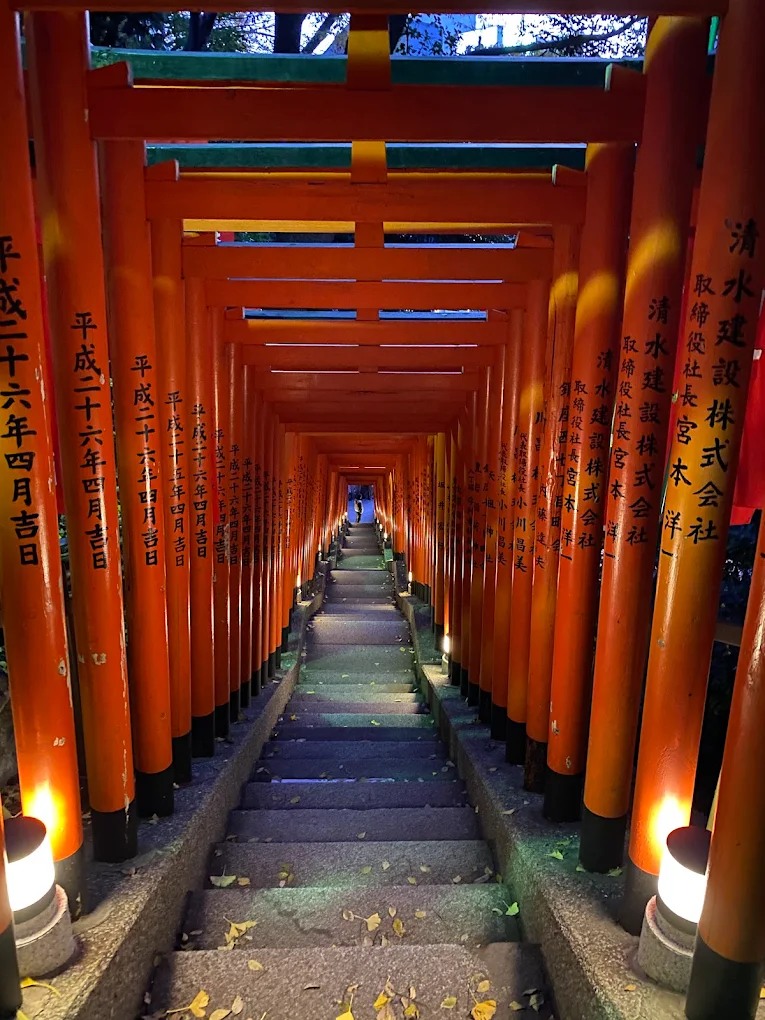
Compared to the normal vermillion gates of other shrines, most of the gates of Hie are triangular-shaped on the top, which is part of the architectural style that characterizes that shrine. The stair case inside these gates is somewhat of an exercise, yet one can have an escalator too! On the peak, you will be compensated with the beautiful shrine buildings as well as being surprised by the view of the modern Tokyo building skyline through the trees.
Combining the Tokyo experience of the old shrines and the new city architectural design provides a contrasting experience to the city. Hie Shrine is devoted to the Oyamakui-no-kami, who is a mountain god and considered to be very successful in business, marriage, and child-bearing.
You will find that the business people make frequent visits to pray to be successful in their business. The monkey figures in the shrine are especially famous the male monkey to which a scroll (as a symbol of wisdom) is given and the female one which carries a baby monkey (as a symbol of safe childbirth).
One of the three largest festivals of Tokyo, the Sanno Matsuri, held in mid-June of even-numbered years, are practiced here. The festival is characterized by massive procession of portable shrines, traditional music and individuals dressed in the costume of the Edo period parading into the central Tokyo.
PRO TIP << Go in the early evening during sunset to have a fairy-tale moment when the lanterns are on and the torii gates lit up against the twilight sky. The shrine is exquisitely lit and far less noisy than in daytime.
5. Yasukuni Shrine
One of the most peaceful and at the same time historically complicated shrines in Tokyo is Yasukuni Shrine. It is a shrine dedicated to the spirits of people who died in service to Japan especially during wars starting with the Boshin War to the WWII. It is a bold and glorious attitude to Yasukuni, the great gate being a huge torii, a steel one, the largest in Japan.
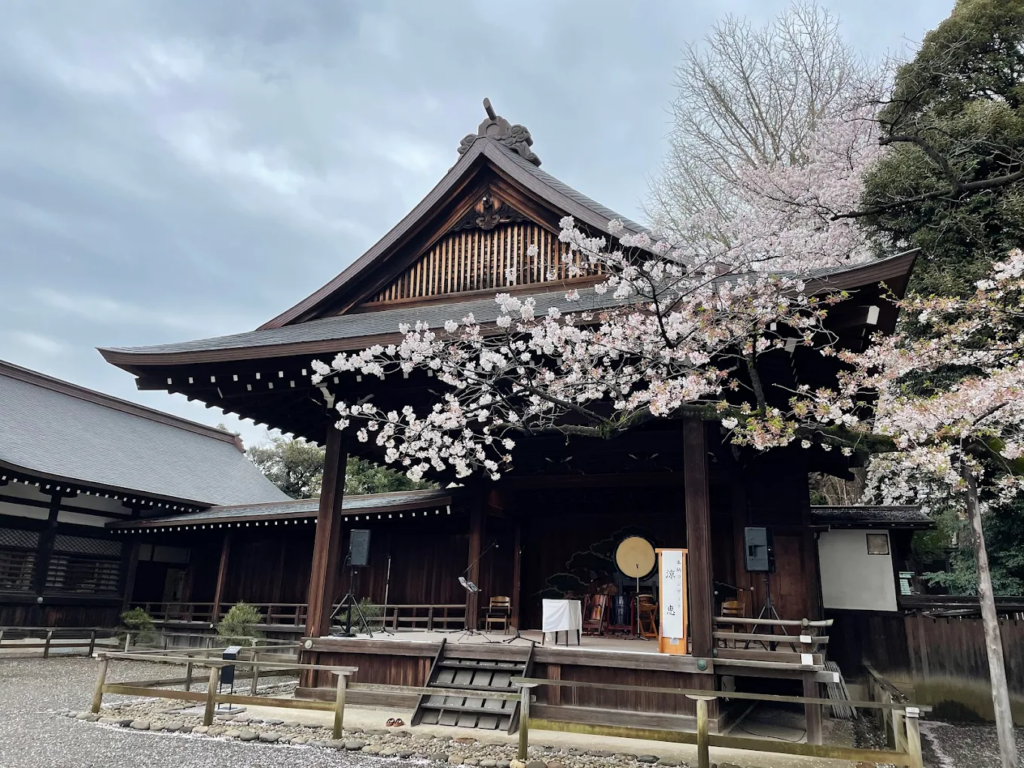
The walkway to the main hall is lined with trees to produce a calm mood and during cherry blossom season the grounds are one of the most beautiful spots of hanami (flower viewing) of Tokyo with more than 500 cherry trees. The grounds of the shrine are large and well maintained with an elegant pond, a traditional tea house, wide gravel walks which serve as ideal walking paths and a variety of gardens depending on the season of the year.
Though there is a lot of controversy about the political talks of the shrine, the air in the grounds is a most peaceful one. There is also the Yushukan, the war museum on the grounds of the shrine which exhibits the artifacts, documents and exhibits on the Japanese military history. Although the museum is biased in displaying the history of the Japanese military, it provides a glimpse into the interpretation of these events by some elements of the Japanese society. Yasukuni celebrates different events and festivals throughout the year.
The spring festival and the autumn festival are especially important, and they take the form of traditional performances of Noh theater, Kyudo (Japanese archery), and Sumo wrestling shows. PRO TIP>Before visiting Yasukuni, you should go in late March to early April when cherry blossoms are in full blossom to see it at its most beautiful.
Tips for visiting Tokyo shrines
Visiting shrines in Tokyo is a wonderful cultural experience, but there are some important etiquette guidelines and practical tips to keep in mind:
- Purification ritual: At the entrance of most shrines, you’ll find a purification fountain (temizuya). The proper ritual is: take the ladle with your right hand, rinse your left hand, switch hands and rinse your right, pour water into your left palm to rinse your mouth (don’t drink directly from the ladle!), rinse your left hand again, then tilt the ladle vertically to clean the handle.
- Bowing at torii gates: It’s respectful to bow slightly when passing through torii gates, which mark the transition from the mundane world to the sacred space of the shrine.
- Proper prayer etiquette: At the main hall, toss a coin (5 or 10 yen coins are traditional) into the offering box, bow twice deeply, clap your hands twice, make your prayer or wish, then bow once more.
- Dress respectfully: While there’s usually no strict dress code, avoid wearing overly revealing clothing. If visiting during a formal ceremony or entering certain sacred areas, more conservative dress is appreciated.
- Photography rules: Generally, photography is allowed in shrine grounds, but not inside the main halls. Always look for signs indicating photography restrictions, and never use flash near worshippers.
- Omamori (charms) and ema (prayer plaques): These make meaningful souvenirs and your purchase supports the shrine. Omamori are protective charms for various purposes (safety, success, health, etc.) and should not be opened. Ema are wooden plaques where you can write your wishes.
- Timing your visit: Most shrines are open from sunrise to sunset and are free to enter. Early morning visits offer the most peaceful experience and better lighting for photos.
- Watch for festivals: Check the shrine’s calendar before your visit – experiencing a traditional festival or ceremony adds an incredible dimension to your visit.
- Respect worshippers: Remember that shrines are active places of worship, not just tourist attractions. Keep your voice down and be mindful of people praying.
- Cash is essential: Bring coins for offerings and cash for purchasing omamori, ema, or fortunes, as most shrines don’t accept credit cards.
Quick Tokyo travel guide
Tokyo is an incredible city that seamlessly blends ancient traditions with cutting-edge modernity. Here’s what you need to know to make the most of your shrine-hopping adventure.
How to get around in Tokyo
Tokyo has one of the world’s best public transportation systems, making it easy to visit multiple shrines in a day. Here are your best options:
IC Cards (Suica or Pasmo)
The easiest way to navigate Tokyo is with a rechargeable IC card like Suica or Pasmo. You can purchase these at any station, load them with money, and simply tap to enter and exit trains, subways, and buses. They also work at convenience stores and vending machines! As of 2026, you can also add these to your iPhone or Android wallet, though physical cards are still available.
Train and subway
Tokyo’s train network is extensive, covering both JR lines (including the circular Yamanote Line) and private subway lines. Most of the shrines on this list are easily accessible:
- Senso-ji: Asakusa Station (Ginza Line, Asakusa Line)
- Meiji Jingu: Harajuku Station (JR Yamanote Line) or Meiji-Jingumae Station (Chiyoda/Fukutoshin Lines)
- Nezu Shrine: Nezu Station (Chiyoda Line) or Sendagi Station (Chiyoda Line)
- Hie Shrine: Tameike-Sanno Station (Ginza/Namboku Lines)
- Yasukuni Shrine: Kudanshita Station (Tozai/Hanzomon Lines)
Walking
Tokyo is a very walkable city, and I often enjoy walking between shrines if they’re in the same neighborhood. The journey itself becomes part of the experience as you discover hidden alleys, local shops, and neighborhood gems.
Where to stay in Tokyo
Tokyo is divided into many distinct neighborhoods, each with its own character. For shrine visits, I recommend staying in: Asakusa: Perfect if you want to be close to Senso-ji and experience Tokyo’s traditional downtown atmosphere. The area has excellent budget to mid-range accommodation options and is less hectic than other tourist areas.
Shibuya/Harajuku: Ideal for accessing Meiji Jingu and experiencing Tokyo’s vibrant youth culture and shopping scene. Great range of hotels from budget hostels to luxury options.
Shinjuku: Central location with excellent train connections to all shrines. The area has everything from business hotels to luxury accommodations, plus amazing food options.
Ueno: Good budget-friendly option with easy access to Asakusa and Nezu Shrine, plus Ueno Park and its museums are right there.
Best time to visit
While Tokyo’s shrines are beautiful year-round, certain seasons offer special experiences:
- Spring (March-April): Cherry blossom season makes shrine visits magical, especially at Yasukuni and Meiji Jingu
- Late April-Early May: Perfect for seeing Nezu Shrine’s azalea garden in full bloom
- Autumn (November): Fall colors are stunning, particularly at Meiji Jingu’s forest
- New Year (January 1-3): Experience hatsumode at its most festive, though expect huge crowds
- Summer (June-August): Hot and humid, but you’ll see summer festivals and hydrangeas blooming at some shrines
Essential tips
- Get a JAPAN RAIL PASS if you’re also visiting other cities – it can save you significant money on transportation
- Download Google Maps – it works perfectly in Japan and includes detailed train route planning
- Learn basic phrases – “Sumimasen” (excuse me) and “Arigato gozaimasu” (thank you very much) go a long way
- Carry cash – while Tokyo is increasingly card-friendly, shrines and small shops still prefer cash
- Book accommodation early – especially during cherry blossom season and holidays when prices skyrocket Tokyo’s shrines offer a peaceful counterpoint to the city’s famous energy and modernity. Each one tells a different story about Japan’s spiritual traditions and history. Take your time, observe the rituals, soak in the atmosphere, and let these sacred spaces reveal their magic to you.
If you’re thinking about posting photos from your shrine visit, check out these 75 best Japan Travel Instagram captions for you to use!